
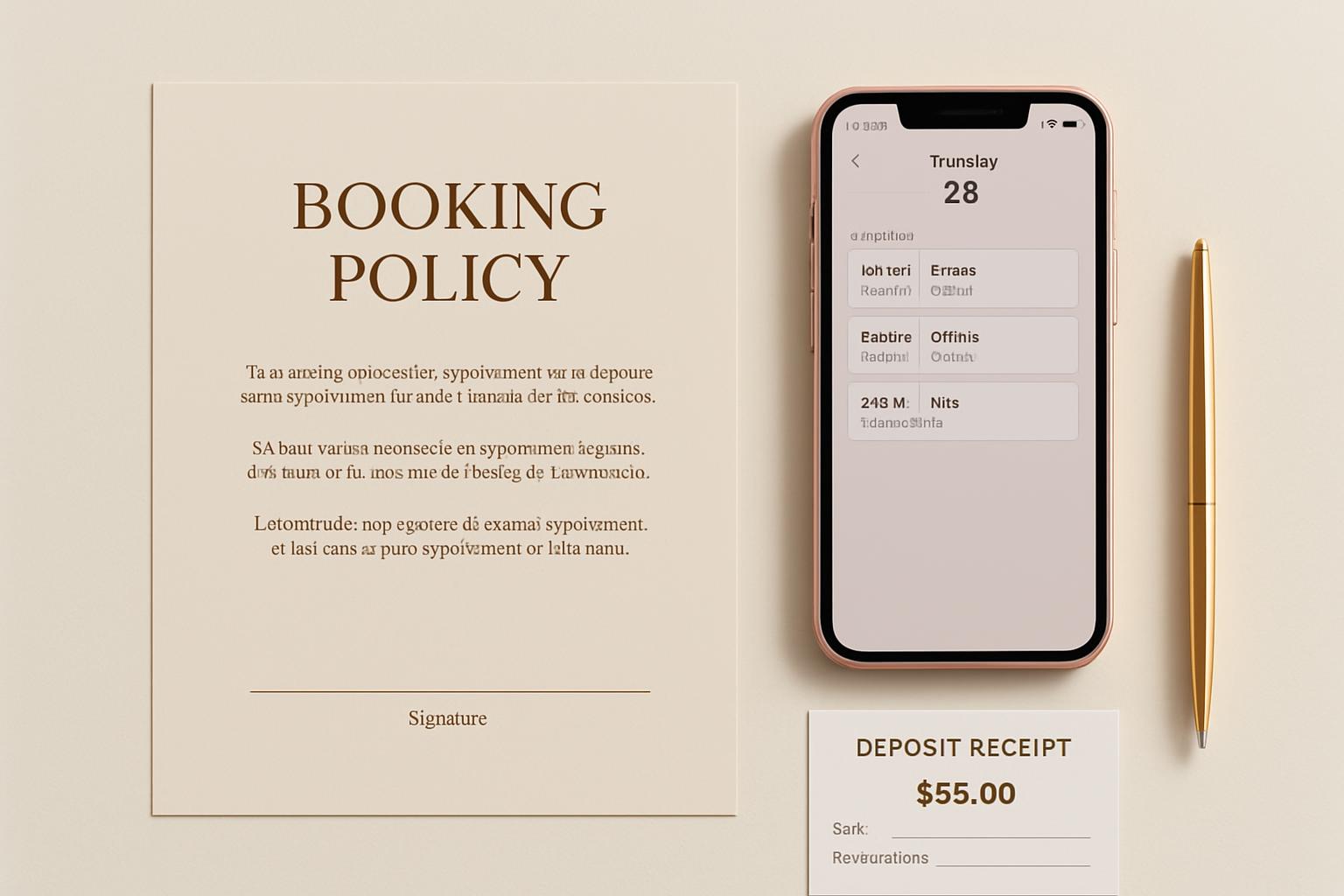
Most booking problems start before a client ever sits down.
A client chooses the wrong service because the menu is unclear. A deposit argument happens because the policy was buried in a highlight. A first appointment runs long because the intake form did not ask the right questions. A repeat client disappears because nobody made the next step obvious.
This checklist is for solo lash artists and newer studios that already know how to do the work, but still have the client workflow scattered across DMs, booking links, notes, and memory.
The goal is simple: a client should understand what to book, what to expect, how to prepare, and what happens next without needing a long back-and-forth first.
The Booking Setup Checklist
Use these seven blocks as your foundation.
1. Service Menu Clarity
Your service menu should help a client choose the right appointment before they book.
Start by defining every service in plain client language:
- Full set
- Fill
- Foreign fill
- Lash lift
- Removal
- Add-ons
- Consultation
For each service, write down:
- Who it is for
- Typical appointment length
- What the client needs to know before booking
- What would make the appointment the wrong fit
- When a fill becomes a full set
If your menu is hard to explain, it is hard for clients to book correctly. The lash service menu guide walks through the structure in more detail, and the menu builder can help you turn the decisions into client-facing wording.
Client-facing example:
Fills are for returning clients who are inside the fill window and still have enough extensions remaining, such as 40% coverage if that is your policy. If too many extensions are missing, the appointment may need to be booked as a full set.
2. Booking Policy
Write your policies before clients ask.
At minimum, define:
- Deposit or booking hold
- Cancellation window
- Late arrival rule
- No-show rule
- Fill timing
- Foreign fill policy
- Guest or child policy
- Makeup, caffeine, contact lenses, or prep guidance if relevant
Keep the wording firm but calm. The goal is to remove surprise, not sound harsh. If clients only see your policy after a problem happens, the policy will feel personal. If they see it before booking, it becomes part of the workflow.
The booking policy guide covers deposits, cancellation windows, and no-show rules. The policy generator is built for turning those decisions into copy you can adapt.
Client-facing example:
Please review the booking notes before your appointment. They help protect your time and make sure we can deliver the exact set you want.
3. Intake Questions
Your intake form should collect information that changes the appointment.
Useful questions include:
- Is this your first lash appointment or are you a returning client?
- Do you currently have extensions on?
- Have you had reactions, sensitivities, or retention issues before?
- Do you wear contact lenses?
- Do you have a styling preference or reference photo?
- Are there lifestyle factors that affect retention?
- Are you coming from another artist for a foreign fill?
- Is there an event date or deadline?
Do not overcollect. Ask what helps you make a better decision. The lash client intake form guide explains what belongs in a form, and the intake builder gives you a cleaner starting point.
4. Prep Instructions
Prep instructions reduce awkward conversations at the appointment and protect the final result.
Send clear guidance before the appointment:
- Arrive with clean lashes
- Avoid heavy eye makeup
- Avoid oil-based products around the eyes
- Arrive on time
- Disclose sensitivities or recent reactions
- Know whether contact lenses should be removed
Prep should not live only in a caption from six months ago. Put it in confirmations, reminders, and any booking notes clients see before they arrive.
5. Appointment Notes
After each appointment, save what future-you will need.
Record:
- Service performed
- Map or style
- Curl, diameter, length, and adhesive notes
- Sensitivity notes
- Retention notes
- Aftercare reminder sent
- Client preference
- Next recommended service
Repeat clients should not feel like you are starting from scratch every time. A short note after the appointment can save the next consultation.
6. Aftercare
Aftercare is not just education. It is retention protection.
Make the instructions easy to repeat:
- How soon to cleanse
- How to cleanse
- What to avoid
- What shedding is normal
- When to message the artist
- When to book a fill
If clients keep asking the same aftercare questions, the workflow is telling you where the gap is. Turn the answer into a saved script, confirmation, or follow-up message. The client script generator is useful for tightening that language.
7. Rebooking
Give clients a clear next step before they leave.
Define:
- Recommended fill window
- How to choose the right fill
- When to book a full set instead
- How to message if retention changes
Client-facing example:
Most returning clients book their next fill based on retention and timing. If you are unsure which fill to choose, send a clear photo before booking.
If fills are where clients get confused, use a visible rule that explains fill windows, retention thresholds, late fills, and foreign fills without making the rule sound universal.
Price And Booking Path Check
For each bookable service, make five things visible before the client taps book:
- Who the service is for
- The price basis, such as set price, starting price, fill tier, or consultation first
- Whether a deposit or booking hold is required
- When a fill becomes a full set
- What the client should do if they are not sure
This is where service menu clarity, pricing structure, and policy wording meet. The lash pricing guide helps you decide how to frame the price basis, the lash service menu guide helps clients compare services, and the policy generator helps turn deposit and cancellation rules into booking copy.
If a client has to DM you before choosing between a fill, full set, removal, or consult, the booking path still has a gap.
Quick Audit
If a client booked today, could they find the answers to these questions without DMing you?
- Which service should I choose?
- What happens if I am late?
- What if I need to cancel?
- Do I need a deposit?
- How should I arrive?
- What should I avoid before the appointment?
- What happens if I have old extensions from another artist?
- When should I come back?
If the answer is no, your booking setup needs tightening.
What To Fix First
Start with the highest-friction piece.
- Fix the service menu if clients choose the wrong appointment.
- Fix policies if clients argue about time, deposits, or cancellations.
- Fix intake if appointments start with too many unknowns.
- Fix prep if clients arrive unready.
- Fix notes if repeat clients are hard to remember.
- Fix aftercare if retention questions repeat.
- Fix rebooking if clients disappear after one appointment.
Do not overhaul everything at once. Pick the weak point that creates the most client confusion and make it visible in the booking flow.
How This Fits
LashDesk helps independent lash artists turn this setup into a cleaner workflow: service menus, pricing structure, booking policies, intake questions, client scripts, launch tracking, weekly review, and client history.
The software matters, but the order matters more. Make the decisions first. Then put them somewhere clients can actually see and follow.
FAQ
What should a new lash artist set up before taking clients?
Set up a clear service menu, booking policy, intake form, prep instructions, aftercare wording, appointment notes, and rebooking process. Those seven pieces prevent most early booking confusion.
Do I need a booking policy before I have many clients?
Yes. It is easier to set the policy before the first conflict than to introduce it after clients are used to flexible rules.
What is the most important booking setup item?
Start with the part causing the most friction. For many new artists, that is either service menu clarity or cancellation and deposit wording.
How do I reduce pricing and booking questions before a lash appointment?
Put the price basis, deposit rule, service choice guidance, fill window, and not sure what to book path beside the booking option so the client does not need to DM before choosing between a fill, full set, removal, or consult.
Should this all live in my booking software?
As much as possible, yes. A policy or intake question only helps if the client sees it at the right moment. Keep the workflow visible inside booking, confirmation, reminder, and follow-up touchpoints.