
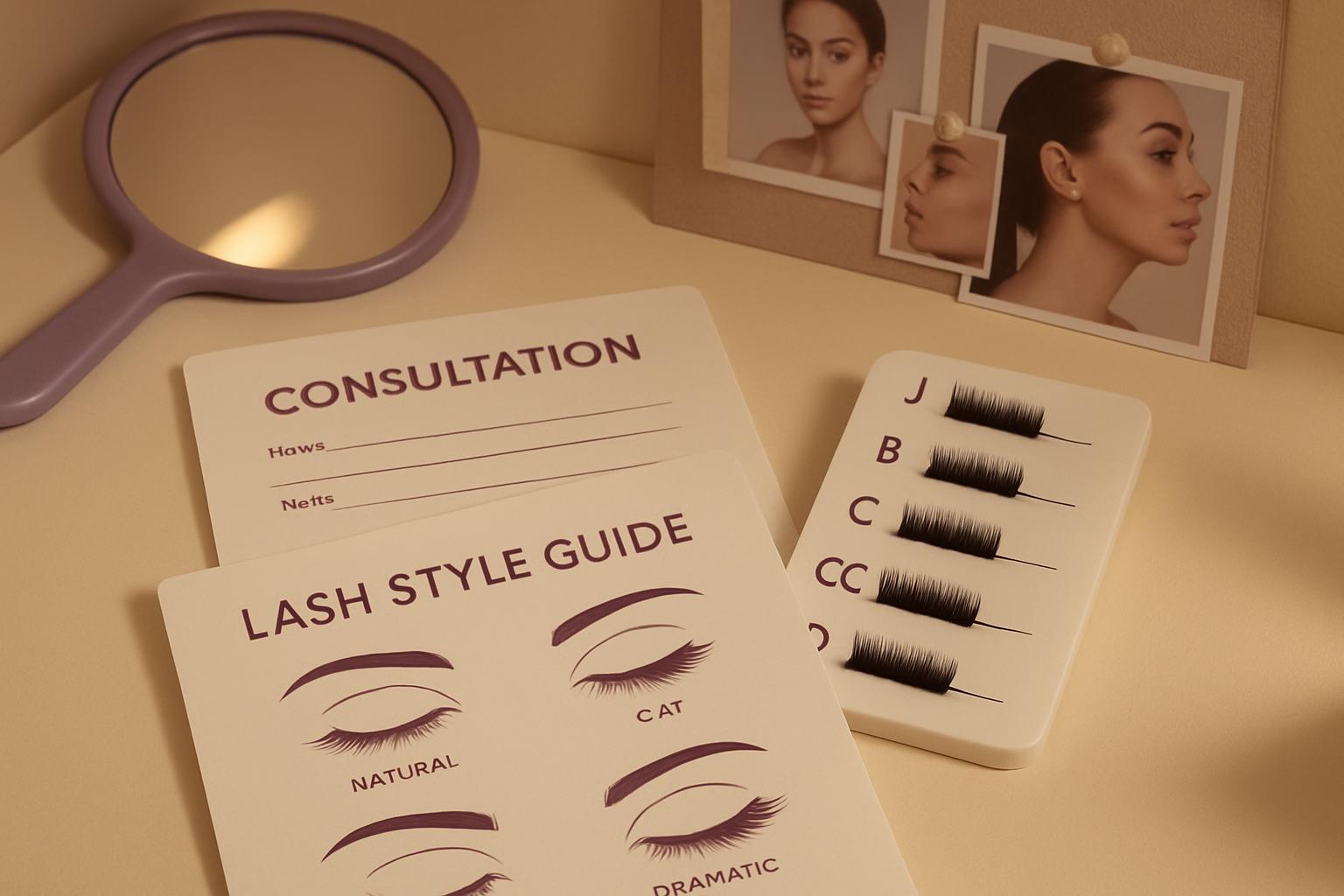
How to Set Client Expectations Before a Lash Appointment
A client walked out of her lash appointment upset. Not because the work was bad. Not because the tech did anything wrong. Because what she saw in the mirror looked nothing like the photos she’d brought in.
Here’s the part that stings: the tech had actually told her the style wasn’t going to match perfectly — her lash structure couldn’t support the exact look. But it was mentioned briefly, mid-appointment, after the work had already started. By then, the client had already committed in her head to what she thought she was getting.
This is one of the most common sources of lash drama. And it has almost nothing to do with skill.
It’s a communication problem. And it happens at booking, not in the chair.
The Gap Between the Inspo Photo and the Mirror
Clients don’t know what they don’t know. They find a photo on Instagram — long, wispy, dramatic lashes on a model — and they want that. What they don’t realize:
- That model may have a different eye shape than they do
- Some styles only work on lashes with enough natural density to support them
- The angle, lighting, and editing in the photo are doing a lot of work
- “Long” means different things to different people
This isn’t a client failure. It’s just how people work. We show up to the hairdresser with a photo of someone with completely different hair texture expecting the same result.
The difference is, a good hairdresser tells you in the consultation what’s achievable — before they pick up the scissors.
Your lash clients deserve the same.
When Expectation Gaps Actually Form
Most techs think expectation failures happen at the end of an appointment. They don’t. They form at three earlier moments:
At booking. The client locks in a mental picture of the result the moment they book. If nothing challenges that picture before they arrive, it hardens into an assumption.
Before the appointment starts. The consultation is your window. Once application begins, the client’s brain is already committed to the outcome. Feedback at this stage feels like damage control.
When limitations come up mid-appointment. If you tell a client mid-service that you’re going to go shorter “because I’m not sure how your lashes will hold up,” she hears: something is wrong and we’re adjusting. That feeling doesn’t go away at the end. It shapes how she evaluates the result.
What a Real Consultation Looks Like
A real consultation is not asking “so what are you thinking?” and then proceeding.
It’s a diagnostic. You’re figuring out:
- What they want — specific style, length, curl, effect (dramatic vs. natural, cat eye vs. baby doll)
- What their natural lashes can support — density, length, health, previous damage
- Their lifestyle — swimmer? Gym person? Hot showers? This matters for retention and style durability
- The gap between what they want and what’s achievable — and what you’re going to do about it
That last point is where most consultations fall short. Techs often know the gap exists but don’t say it directly because they’re worried about disappointing the client upfront.
Here’s what that silence costs you: a disappointed client after the service instead of a client who understood the trade-offs and chose to proceed.
Those two clients leave your chair with completely different feelings about their experience — even if the lashes look identical.
How to Actually Name the Gap (Without It Being Awkward)
You don’t have to deliver bad news. You’re setting context.
Instead of: “I’m going to go a bit shorter, I’m not sure how your lashes will hold up”
Try: “Based on your lash structure, I’m going to recommend a length that’ll actually last — going longer would look great today but you’d lose them faster. Here’s what I’m thinking…”
Instead of: “That exact style won’t work on you”
Try: “Your eye shape is great for a lifted look — the inspo photo you showed me has a rounder eye so the style is slightly different. What I’d recommend for your shape is [X], which will actually be more flattering for you than a direct copy.”
The principle: You’re not telling them what they can’t have. You’re telling them what will look best on them. That’s a completely different conversation.
Build Expectation-Setting Into Your Booking Flow
The consultation doesn’t have to start in your studio. It can start at booking.
Some things you can capture before they arrive:
- Inspo photos — ask clients to attach 1-2 reference photos when booking. This does two things: it forces them to articulate what they want, and it gives you information before the appointment.
- Current lash status — are they starting fresh, transferring from another tech, coming off a break?
- Previous lash experience — what worked, what didn’t, how long lashes typically lasted for them
- Lifestyle questions — the pool question, the gym question, the sleep position question
A well-designed intake form captures all of this systematically, so you’re not starting from scratch with every client.
You don’t have to turn intake into an interrogation. Even 3-4 targeted questions changes the quality of the appointment dramatically.
When clients fill this out before arriving, they’ve already started doing the mental work. They’re thinking about what they actually want. The conversation is already in progress before they sit down.
The Debrief: Closing the Loop After the Service
Expectation management doesn’t end when the service does.
A quick debrief before the client leaves:
- “Here’s what I did and why — I went with X length because Y”
- “To maintain these, here’s what to avoid in the first 48 hours”
- “At your next fill, if you want to try adjusting the style, let me know what you’d like to change”
This does two things. First, it gives the client language to evaluate what they got. Second, it surfaces any dissatisfaction before they leave — when you can still address it.
Clients who are a little uncertain about their result after a good debrief will give you a chance to adjust. Clients who leave uncertain and then sit with it for 24 hours will just not come back. Following up after the appointment with a message that reiterates what you did helps reinforce the expectation you set. Check out the aftercare and follow-up scripts for templates you can use.
What Happens When You Don’t Do This
The pattern is predictable:
- Client arrives with mental image of result
- Tech sees the gap but doesn’t name it clearly
- Service is delivered — technically good work
- Client sees the result and it doesn’t match the image in their head
- Client either says nothing and doesn’t rebook, or leaves an unclear review, or posts on Reddit asking if they’re being unreasonable
That last part is real. “Unhappy with results — not sure if I’m being unrealistic or picky” is a genuine post that appears in lash communities every week. The client isn’t wrong. The tech wasn’t bad. The expectation gap just wasn’t closed.
And the frustrating part: the tech will never know. The client won’t say anything, because she doesn’t know if her dissatisfaction is valid.
The Practical Checklist
Before every new client appointment:
- [ ] Review their intake form and inspo photos before they arrive
- [ ] Start consultation before application begins, not during
- [ ] Name any gaps between their inspo and what you’re going to deliver
- [ ] Confirm they understand and agree before you start
- [ ] End the service with a brief debrief — what you did, why, what to watch for
- [ ] Ask directly: “Are you happy with how these turned out? Anything you’d want different next time?”
That last question is the one most techs skip. It feels risky. But a client who says “I’d like a little more length next time” in the chair is giving you information you can use. A client who says nothing and doesn’t rebook is just… gone.
The Bigger Picture
Good lashes require two things: skill and communication. Most techs invest heavily in training and technique. The communication layer often gets treated as secondary.
It’s not. A technically perfect set that doesn’t match what the client expected is a failed appointment in her mind, regardless of the quality of the work.
Setting expectations isn’t a soft skill. It’s part of the service.
If you’re collecting client preferences and inspo photos before appointments, a structured intake form makes this systematic. We wrote a full guide to building a lash client intake form that captures the information that actually matters.
Free Tools for Your Lash Business
We built 7 free interactive tools to help you run your lash business — pricing calculators, policy generators, intake forms, and more. No sign-up required.
Get the Full Starter Kit
All seven tools plus pricing formulas, policy templates, client scripts, and a 30-day launch plan — delivered to your inbox as one download.